Hospiration
UX Research & App Design · Case Study
A mobile app prototype that helps Kudoz volunteers find inspiration to plan and host meaningful experiences for people with cognitive disabilities.
Hosts are dropping out before they ever get started
Kudoz is a Vancouver-based non-profit that connects volunteers called Hosts with people with cognitive disabilities (Kudoers), through hands-on experiences and workshops. The mission is powerful, but the organization was facing a growing problem: Hosts were becoming inactive faster than they were joining.
Through ethnographic research embedded within the organization, we uncovered that the real barrier wasn't motivation it was the friction of planning. Hosts struggled to generate Experience ideas and found the proposal process discouraging, causing them to disengage before ever hosting.
Project Details
Time Frame:
Sept 2019 – Dec 2019
Role:
UX Researcher, Ethnography & App Designer
Team:
Team of Six
Type:
Academic Term Project
Deliverables:
Ethnographic Research, Personas, Journey Maps, Mobile App Prototype
Tools:
Adobe XD, Persona & Journey Mapping
Users & Research
Understanding the ecosystem, not just the users
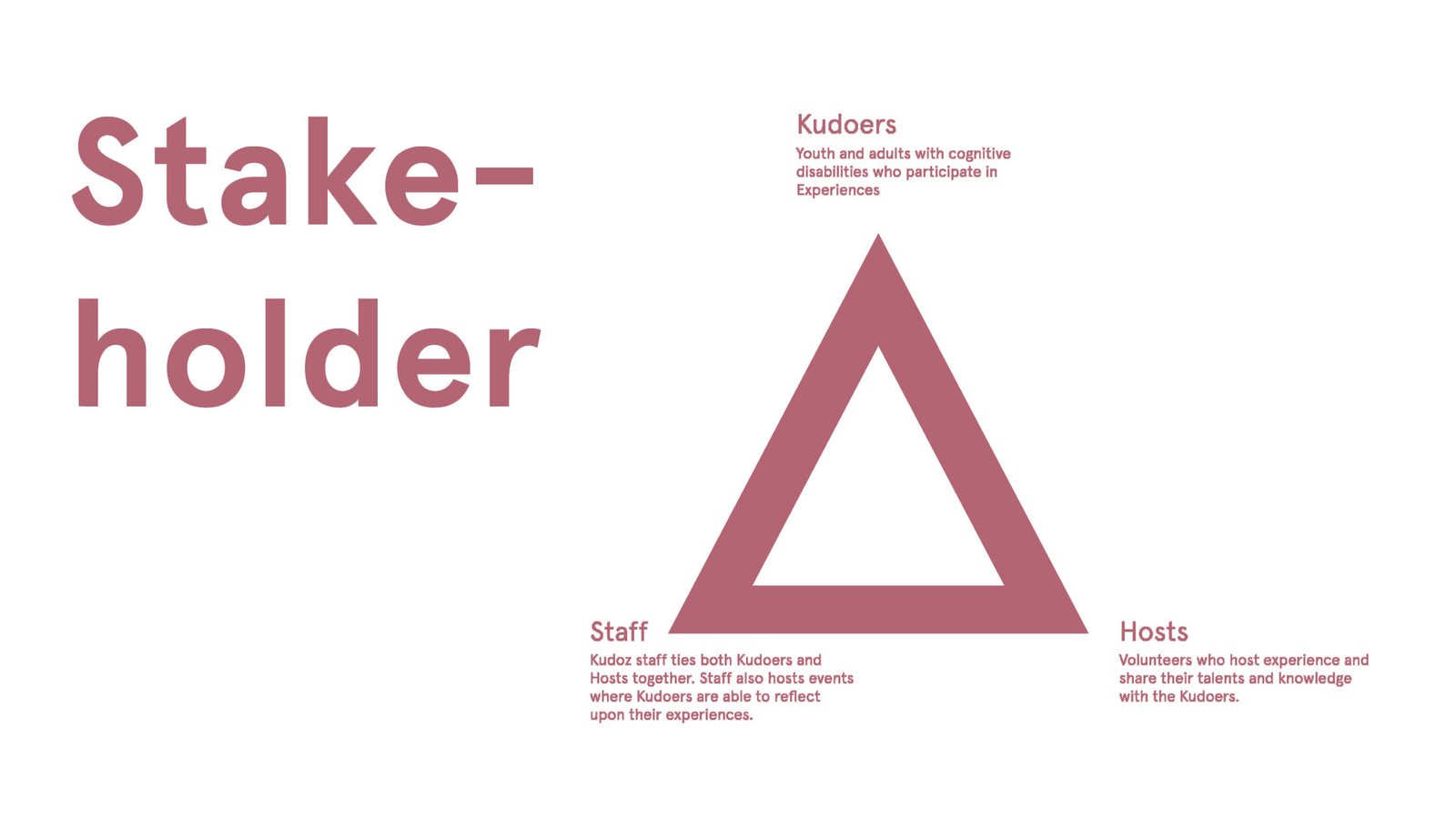
Kudoz operates with three interconnected stakeholder groups. To design effectively, I needed to understand how all three experienced the system where it worked, and where it broke down.
Kudoz Hosts (Volunteers)
Passionate but overwhelmed. Struggled to generate and propose Experience ideas, leading to high dropout rates before hosting even began.
Kudoers (Participants)
Adults with cognitive disabilities seeking meaningful activities and skill-building. Had requests and interests that were rarely surfaced to Hosts.
Kudoz Staff
Coordinated and approved all Experiences. Acted as a bottleneck in the proposal process, adding friction to the Host journey.
Research Process
Embedded in the community, not just observing it
Rather than studying Kudoz from the outside, I actively participated in their experiences throughout the semester as both a participant and an observer. This ethnographic immersion gave me insights that a survey or interview alone could never surface.
Ethnographic Research
Participated in and observed Kudoz Experiences throughout the semester to understand the lived reality of Hosts, Kudoers, and Staff. This immersive approach revealed friction points that stakeholders themselves couldn't fully articulate.
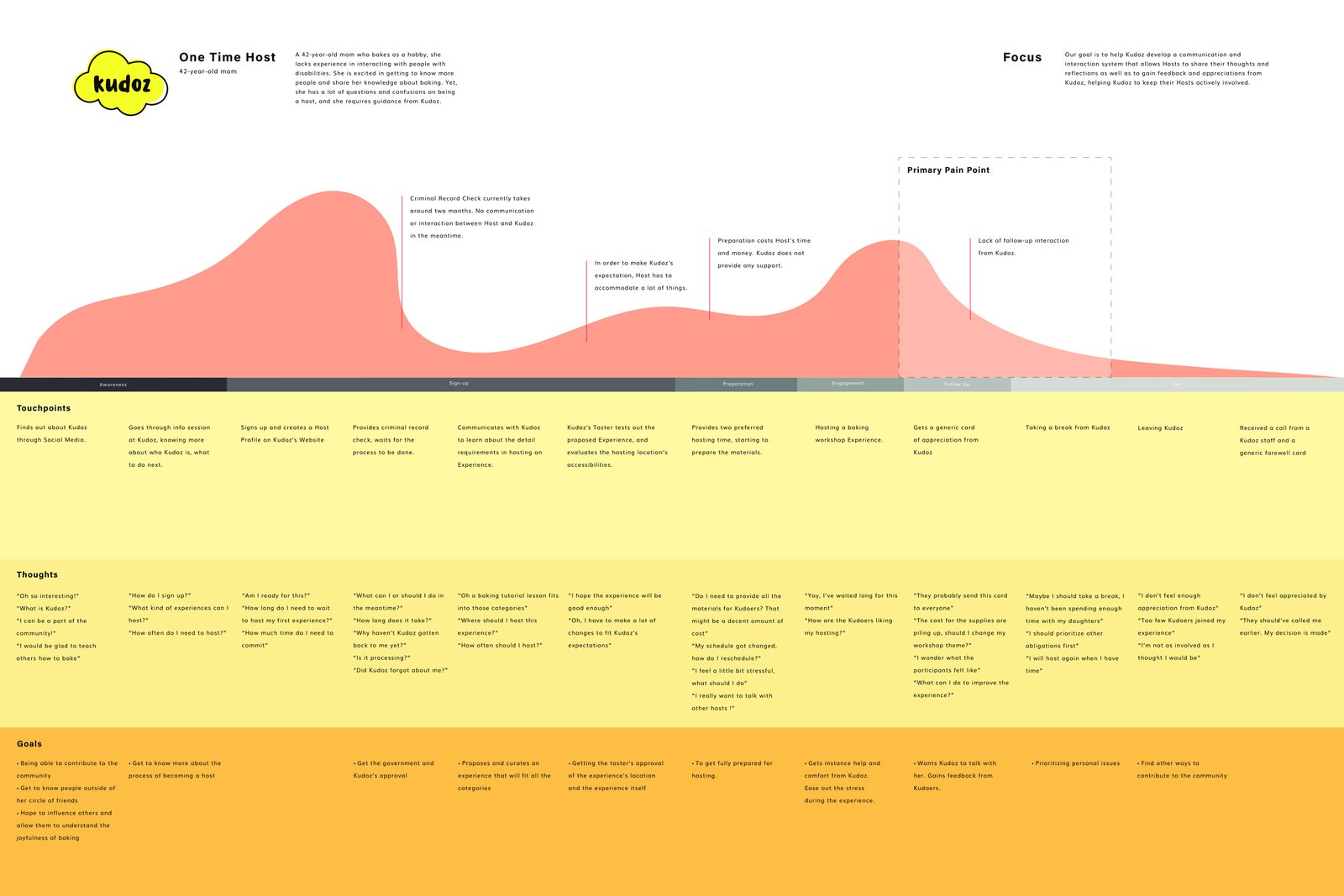
Personas & Journey Mapping
Built personas and user journey maps tailored to the organization's specific context tracing the Host's journey from initial sign-up through experience planning and delivery to identify where and why dropout occurred.
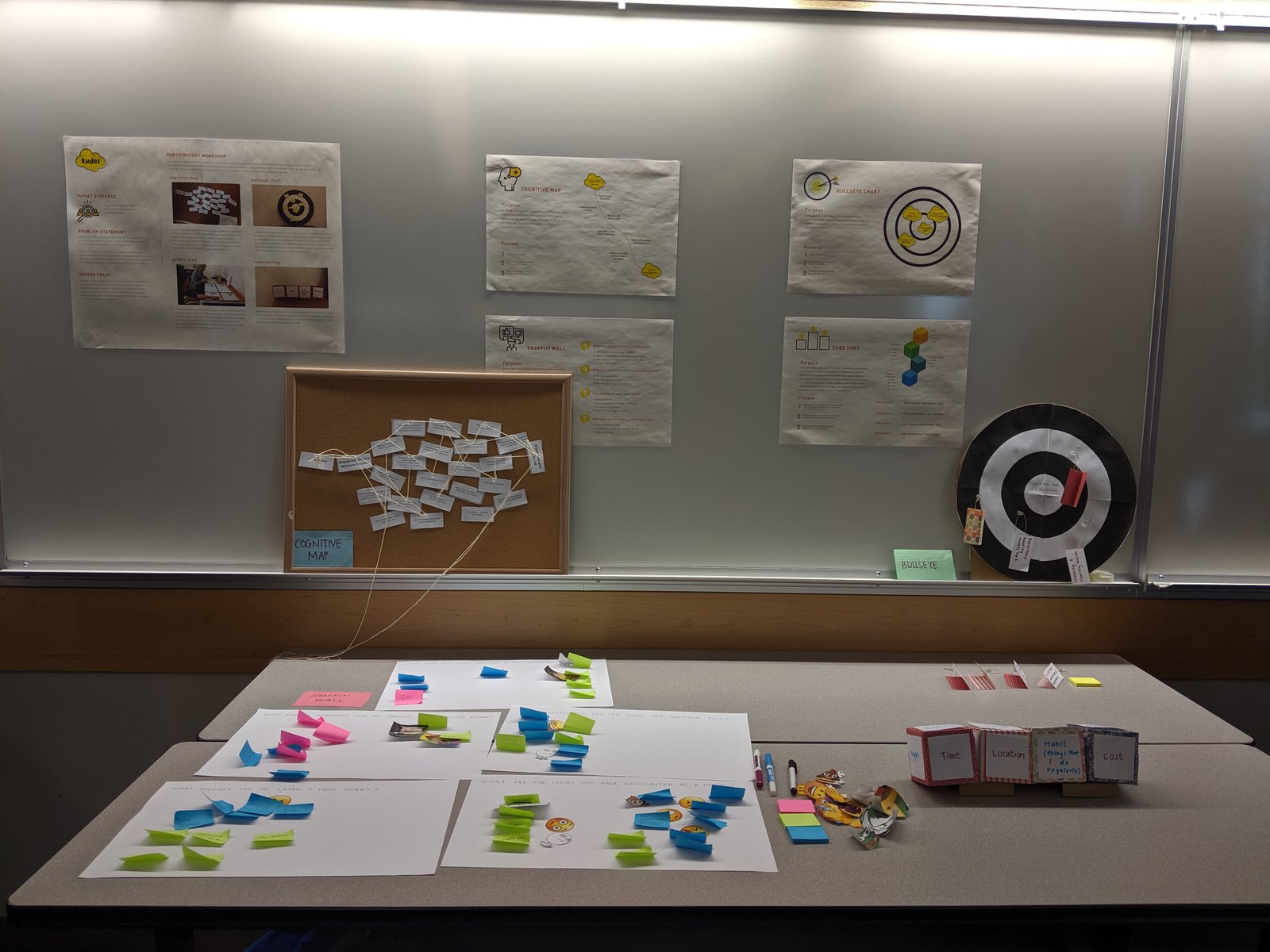
Participatory Workshops
Designed and facilitated participatory workshops including a cube-sorting activity to help participants rank their priorities when planning an Experience to iterate on ideas and validate direction with real users before moving into prototyping.
The Solution
Three features that reduce friction at every stage
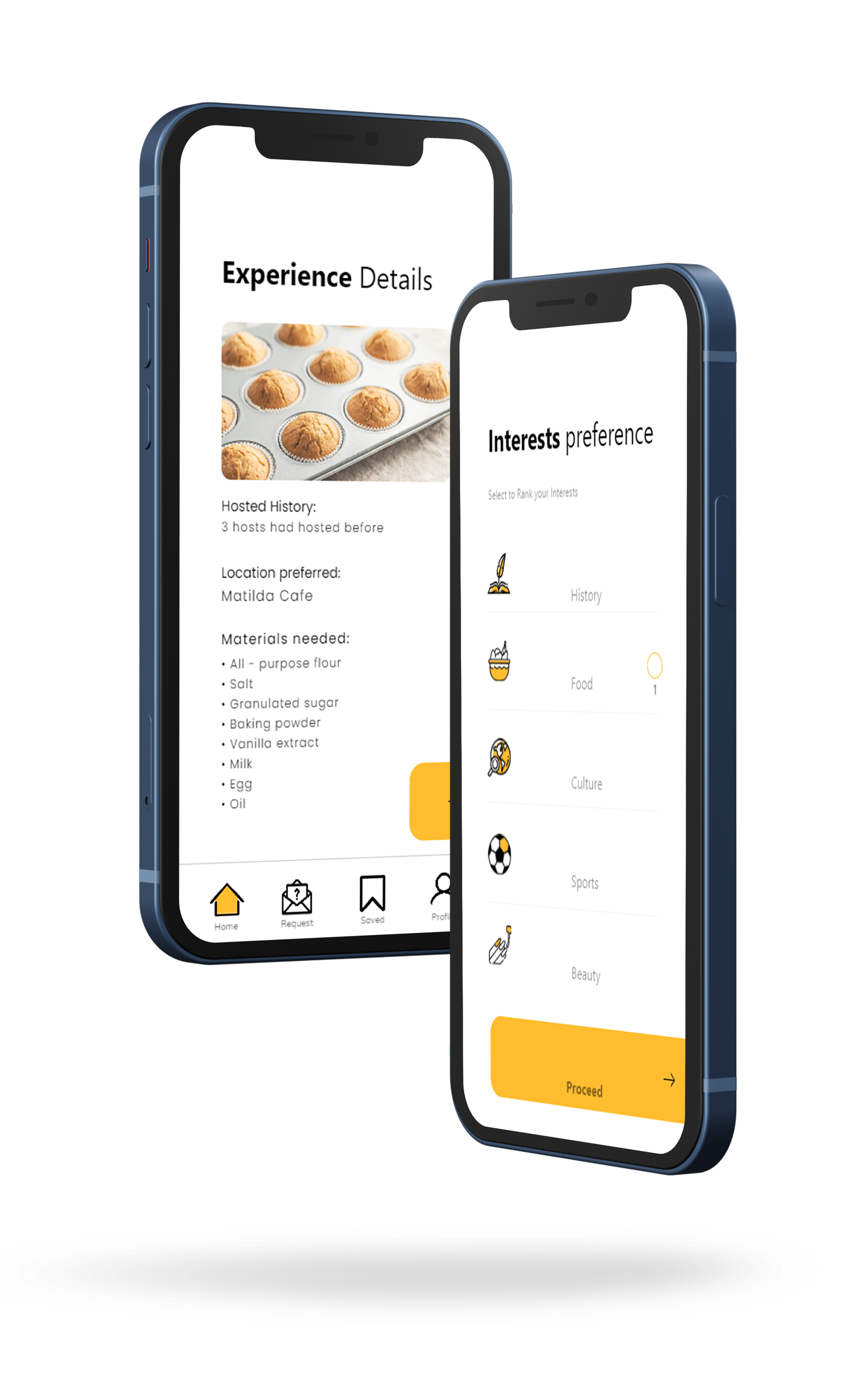
Our research pointed to a clear root cause: Hosts weren't lacking enthusiasm they were lacking structure and inspiration at the idea-generation stage. The Hospiration app prototype addresses this with three targeted features, each removing a specific barrier in the Host journey.
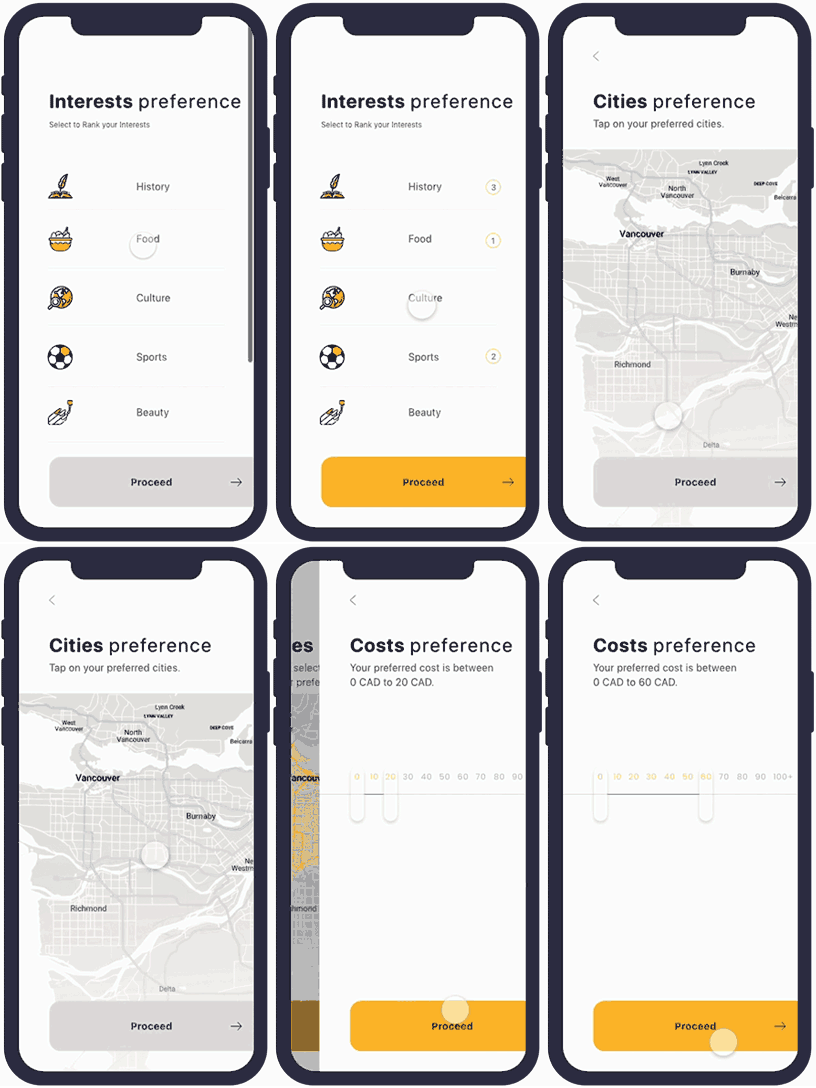
Preference Finder
Hosts select their preferences around interest, cost, and location. These inputs shape a personalised set of Experience suggestions, removing the blank-page problem of idea generation entirely.
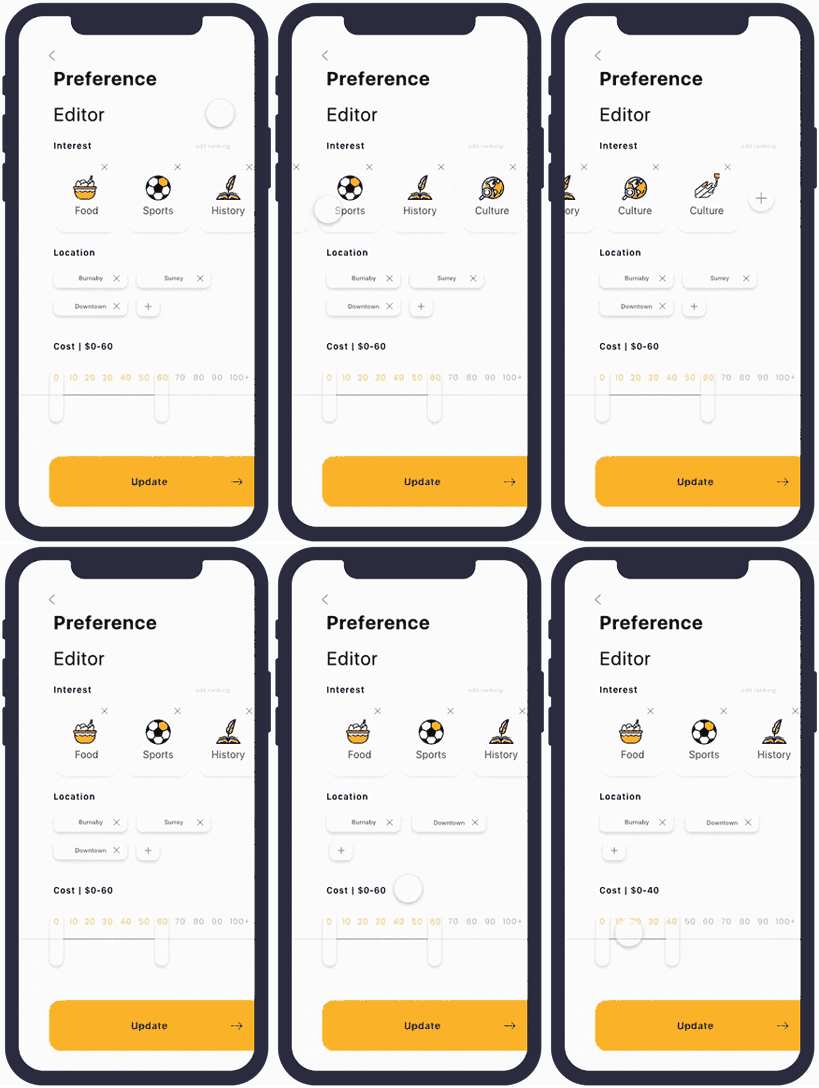
Pre-approved Experiences
A curated list of Experiences already vetted by Kudoz Staff. Hosts can skip the proposal stage entirely, eliminating the most friction-heavy part of the journey and getting them to hosting faster.
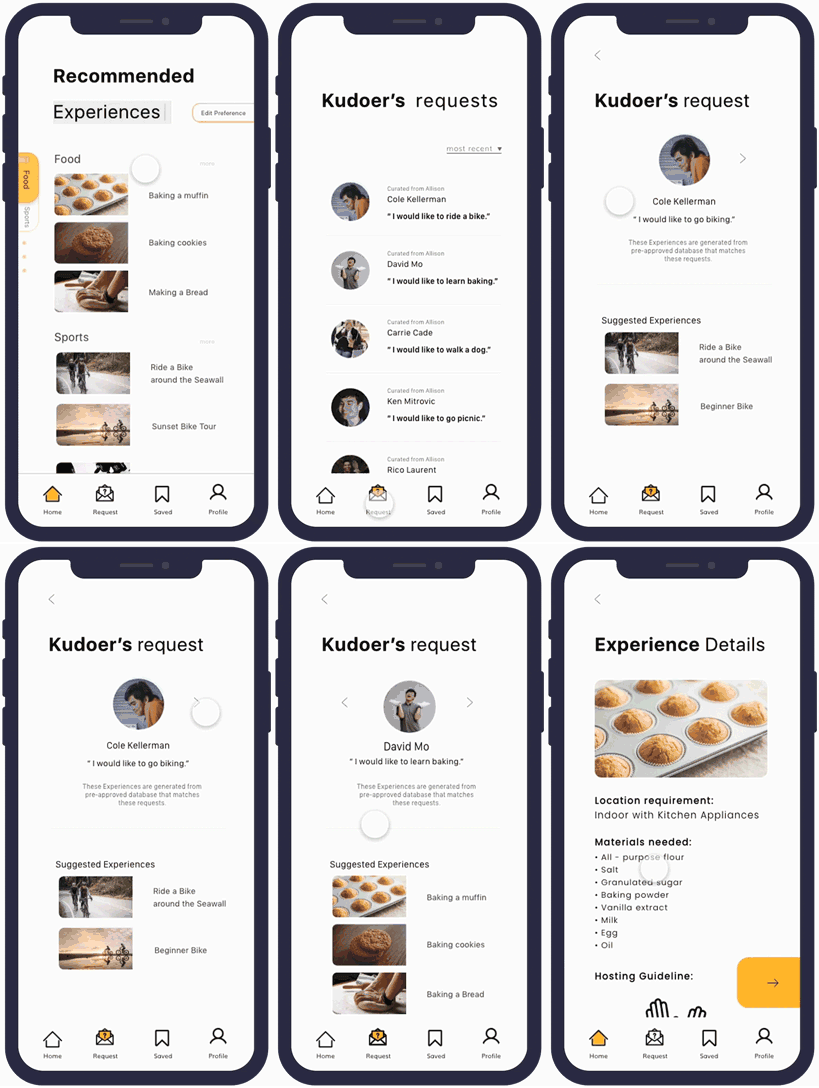
Kudoer's Request
Surfaces real requests from Kudoers directly to Hosts creating a meaningful connection between supply and demand, and giving Hosts a purpose-driven reason to host beyond just choosing an activity.
Impact
What the project delivered
Research-driven design
Every feature was validated through ethnographic fieldwork and participatory workshops grounding design decisions in real observed behaviour rather than assumptions.
Reduced host dropout
The prototype directly addressed the three key barriers causing Host inactivity: idea generation friction, the proposal bottleneck, and lack of connection to Kudoer needs.
Bridged a communication gap
The Kudoer's Request feature created a direct channel between participants and volunteers that didn't exist before making the hosting decision more personal and purposeful.
Scalable UX framework
Personas, journey maps, and workshop findings were handed off to the team as reusable research artefacts to support future iterations of the product.
Key Learnings
What I took away
Ethnographic research surfaces the real problem not the stated one. Hosts didn't say they lacked inspiration; they said the process was hard. Only immersive observation revealed the distinction.
Designing for a mission-driven organization requires understanding the entire ecosystem. A solution that helps Hosts but ignores Kudoers or Staff will ultimately fail.
Participatory methods like workshops produce more honest insights than interviews alone people reveal priorities through actions, not just words.
The most impactful UX decisions often aren't visual removing a friction point (the proposal stage) had more potential impact than any UI polish.